The 30th Climate Summit, COP30, started on 10 November 2025 in Belém, Pará, located in the heart of the Amazon rainforest. Due to the logistical challenges involved in accommodating negotiators, branches, and representatives from the public sector, business, finance, and civil society, the COP was hosted in a decentralised format. A first week of pre-COP events took place in Rio de Janeiro and São Paulo — the former focused on civil society, and the latter bringing together companies, investors, and financial sector stakeholders.
Commissioner Helena Viñes representing the CNMV, participated both in the pre-COP events in Sao Paolo and during the first week of the COP.
Event held by the CNMV in São Paulo on Taxonomy Interoperability
The CNMV, in collaboration with its Brazilian counterparts—the Brazilian Securities and Exchange Commission (CVM)—and the Ibero-American Institute of Securities Markets (IIMV), organised a high-level event on 7 November at the São Paulo Stock Exchange (B3) Headquarters, ahead of the start of COP30. The event was hosted by B3.
The event centred on the launch of the new Taxonomy Interoperability Principles, supported by the Brazilian COPPresidency. These principles were developed by the PRI (Principles for Responsible Investment), UNEP FI, and the Climate Bonds Initiative in collaboration with the Taskforce on Net Zero Policy.
Otto Lobo, Interim President of the CVM, opened the event, which was attended by senior management from the Brazilian Ministry of Finance. Helena Viñes, CNMV Commissioner was joined by distinguished international representatives from Brazil, China (the founder of the Institute of Finance and Sustainability) and Australia (members of the Institute of Sustainable Finance). The event also featured CAF, an organisation that supports the development of taxonomy frameworks in Latin America, with the aim of establishing a commonLatin American framework similar to the one promoted by the African Development Bank for Africa.
The event also featured a dedicated panel on mobilising financing through taxonomies, with the participation of major financial institutions such as JPMorgan Chase, UBS, BNP Paribas, and other global players, who highlighted the launch of financial products based on the taxonomy. A further session focused on prudential regulation, with contributions from the Central Bank of Brazil and the European Central Bank, emphasising the need to integrate climate risk and taxonomies into the regulatory frameworks of banking supervision.
Taxonomy Development
During the financial and business week in São Paulo, Commissioner Viñes took part in two additional events dedicated to the development of taxonomies and their interoperability. At COP30, the Brazilian Presidency resumed the roadmap on taxonomies initiated at the previous COP by Azerbaijan and led by its central bank. This year, the aim is to seek official acknowledgement of taxonomies as a key tool for mobilising capital flows towards sustainable and transition investments, while also promoting the interoperability of green taxonomies.
The São Paulo event underscores the increasing commitment of regulators to using taxonomy as a tool for channelling sustainable investments and fostering regulatory alignment across jurisdictions. It also highlights the growing collaboration between Ibero-American and other global supervisors, with the CNMV playing a prominent role. As COP30 progresses, the institutional cooperation between Brazil and Spain emerges as a relevant example of regulatory collaboration in sustainable finance.
PRI Annual Conference
In São Paulo, during the Public Policy Day at the PRI Annual Conference, which focused on sustainable finance and transition financing, Viñes delivered a keynote speech, highlighting two statements that will shape our climate future: a temporary overshoot of the 1.5°C goal is now inevitable, the impact of which will depend on our ability to limit both its duration and intensity; and the growing backlash, driven by misinformation and polarisation against climate action, which threatens climate and environmental progress, democratic foundations, and financial stability.
The overshoot of the 1.5°C goal underscores the importance of carbon removals and associated credits, which, in addition to mitigating residual emissions in “hard-to-decarbonise” sectors, are essential for meeting the 1.5ºC Paris Agreement goal by the end of the century. On carbon markets, Commissioner Viñes participated in a PRI plenary panel, highlighting the G20’s progress in regulating carbon credits over the past year. The PRI, with over 6,000 members managing more than $120 trillion in assets, showcasing its influence in the global financial transition.
Viñes presented the new report from the Taskforce on Net Zero Policy -a continuation of the United Nations Secretary-General’s High-Level Expert Group on Non-State Actors Net Zero Pledges- which she chairs. This reportassesses policy progress made over the past decade and the previous year, with a particular focus on public policies for the transition: financial planning, capital expenditures, carbon lock-in prevention, carbon credits regulation and Article 6 of the Paris Agreement, adaptation and resilience policies, climate corporate lobbying, and accountability mechanisms.
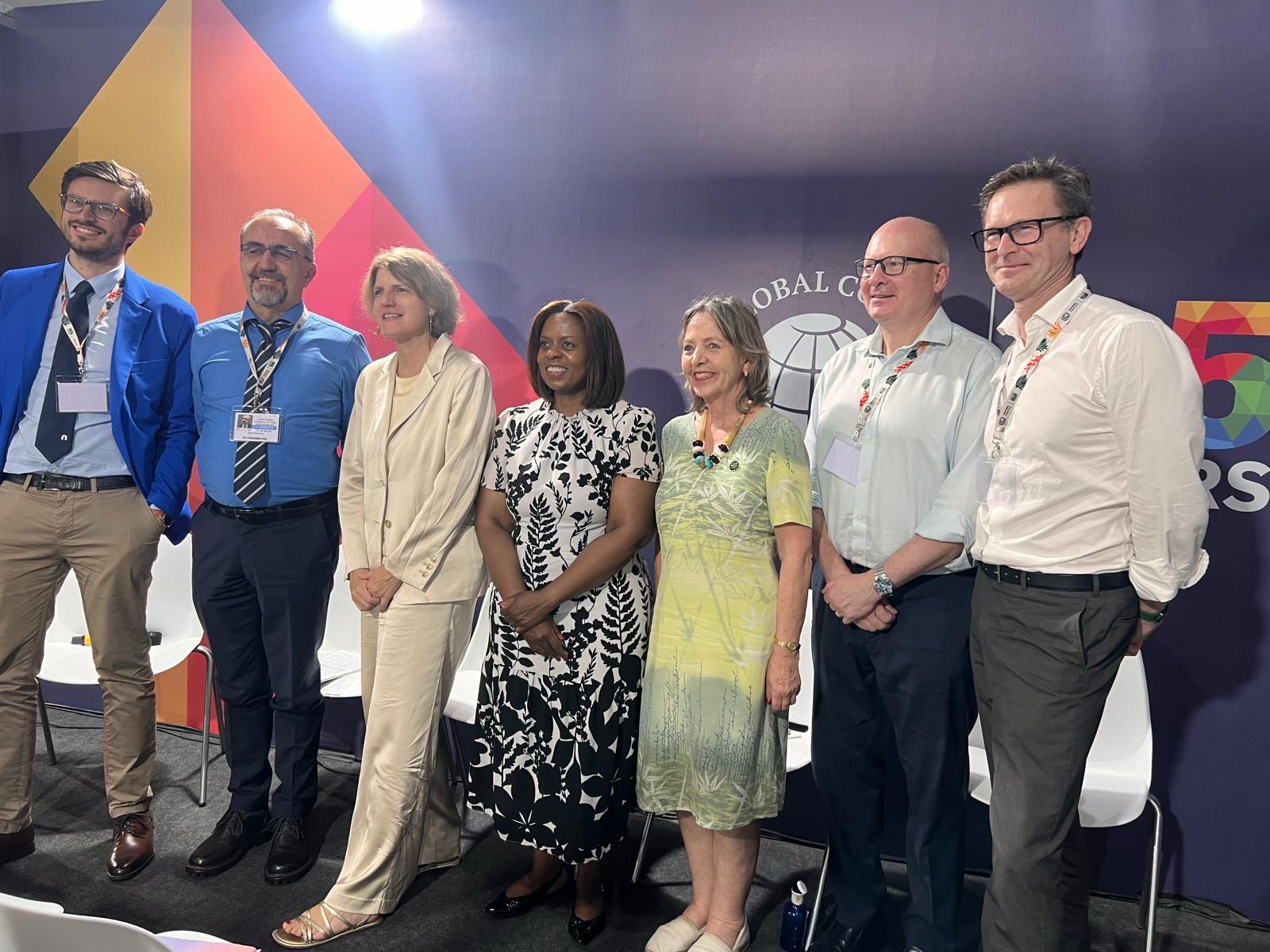
The report was presented at COP30, at both the Spanish Pavilion and the United Nations Global Compact Pavilion, before being delivered to the Secretary-General in New York. The event was attended by the Special Adviser to the Secretary-General on Climate Change, Selwin Hart, along with members of the Taskforce Board and Technical Expert Group. . Key findings included: net-zero regulations for companies and financial institutions in the G20 having tripled since 2020; over 60% of global GDP is covered by disclosure standards aligned with or compatible with the International Sustainability Standards Board (ISSB), such as the European Sustainability Reporting Standards (ESRS); and 65% of jurisdictions having either implemented taxonomies or are in the process of developing them. In addition, 14 G20 jurisdictions have introduced one or more measures requiring the disclosure and/or adoption of emission reduction targets, and 13 regarding transition plans.
Despite progress in areas such as prudentialregulation, carbon pricing , green public procurement, and climate governance, Viñes emphasised that a temporary breach of the 1.5°C threshold requires swift and coordinated policy action, integrated, system-wide and interoperable frameworks, and greater multilateralism. During COP30, she held and took part in four events at the Spanish Pavilion, each focusing on different sections of the report, in addition to speaking at the United Nations High-Level Event and delivering speeches at other pavilions, including the Australian one.
On 15 November, Viñes engaged in discussions with representatives from the European Commission, the Central Bank of Brazil, the Government of Singapore, and the OECD on the report’s findings. The week concluded with an interview with US Senator Sheldon Whitehouse, who highlighted the growing awareness of climate change among US population, progress in carbon markets despite resistance from the current federal administration, the detrimental influence of the oil and gas lobby, the urgent need to reduce methane emissions and the role of digital technology in supporting these efforts. Lastly, he recalled how science predicted the effects of global warming more than 50 years ago, which we are witnessing today.
Further information is available on the CNMV website.